
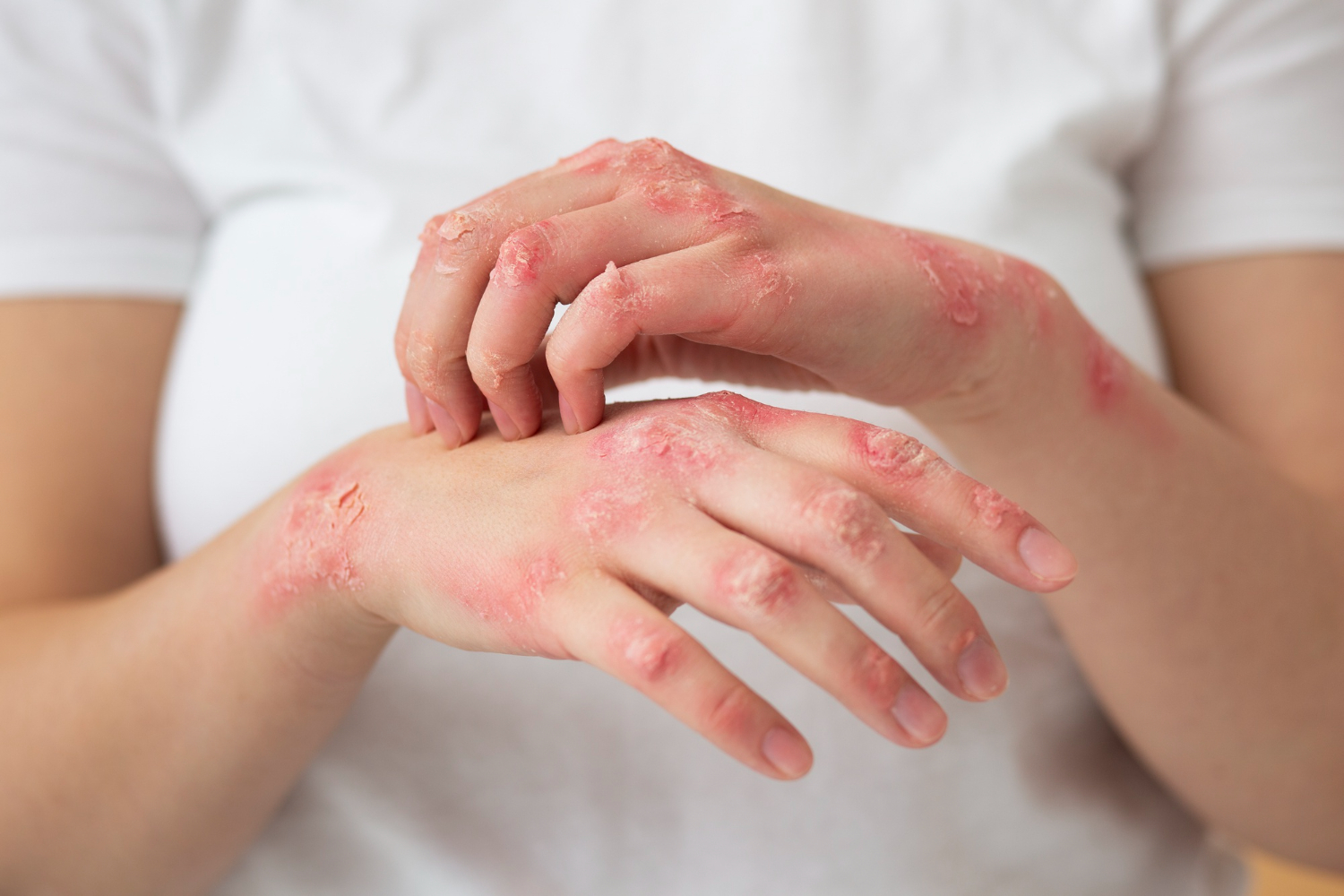
Psoriasis is a chronic inflammatory skin condition that causes skin cells to build up rapidly, resulting in thick, dry and scaly patches. These patches may appear red, inflamed or covered with silvery-white scales and can cause itching, irritation and discomfort. Psoriasis commonly affects the scalp, elbows, knees, hands, feet and other areas of the body. Although it is a long-term condition, appropriate dermatological care can help manage symptoms and reduce the frequency and severity of flare-ups. At K V Skin & Hair Clinic, Mysuru, we provide consultations for psoriasis, focusing on accurate assessment and personalised treatment recommendations.
Led by Dr. Pujith K V, MBBS, DNB (DVL), Consultant Dermatologist, the clinic offers professional dermatological guidance for individuals experiencing psoriasis and related skin concerns.
Psoriasis can develop in different forms, with each type presenting distinct symptoms and patterns.
Common types include:
Plaque Psoriasis: The most common form, characterised by raised, inflamed patches covered with silvery-white scales.
Guttate Psoriasis: Appears as small, drop-shaped spots, commonly affecting the trunk, arms and legs.
Inverse Psoriasis: Causes smooth, inflamed patches in skin folds, including the armpits, groin and areas beneath the breasts.
Pustular Psoriasis: A less common form characterised by white, pus-filled bumps surrounded by red and inflamed skin.
Scalp Psoriasis: Causes scaling, itching and thick patches on the scalp, sometimes extending beyond the hairline.
Nail Psoriasis: Can cause pitting, discolouration, thickening and separation of the nails.
Psoriasis is an immune-mediated condition in which the immune system influences the skin’s cell production cycle. Although the exact cause is not fully understood, several factors may contribute to its development or trigger flare-ups.
Common triggers include:
Genetic predisposition and family history.
Immune system-related inflammation.
Physical injuries, cuts or skin irritation.
Stress and emotional strain.
Certain infections, particularly throat infections.
Cold and dry weather conditions.
Certain medications and lifestyle-related factors.
Psoriasis treatment depends on the type, severity, affected body areas and individual medical history. A dermatologist evaluates the skin condition and recommends suitable management options.
Depending on clinical requirements, treatment may include:
Topical corticosteroids to reduce inflammation.
Vitamin D-based topical medications for selected cases.
Moisturisers to manage dryness and scaling.
Other prescribed topical or oral medications when appropriate.
Treatment for associated scalp and nail involvement.
Follow-up consultations to monitor symptoms and treatment response.
For more extensive or persistent psoriasis, additional treatment options may be considered based on specialist evaluation and clinical suitability.
Although psoriasis does not have a permanent cure, consistent management can help control symptoms and improve skin comfort.
Helpful practices include:
Keeping the skin moisturised regularly.
Avoiding scratching or picking at affected patches.
Identifying and avoiding personal triggers.
Managing stress through healthy daily habits.
Following prescribed medications consistently.
Seeking medical advice when symptoms worsen or spread.
At K V Skin & Hair Clinic, we emphasise accurate diagnosis, evidence-based treatment recommendations and personalised dermatological care. Our approach focuses on understanding each patient’s condition and supporting long-term symptom management.
Consult Dr. Pujith K V for psoriasis treatment and management in Mysuru to receive professional guidance for scaly patches, skin inflammation, scalp psoriasis and other related concerns.